

🇪🇸 Costa Brava Spain — Quick Facts
| 📍 Region | Catalonia, northeastern Spain (Girona Province) |
| 🌊 Coastline | 214 km — Blanes to Portbou (French border) |
| 💱 Currency | Euro (€) — cards accepted in most towns |
| 🗣 Languages | Catalan (primary), Spanish; English in tourist areas |
| 🌡 Best Time to Visit | September–October (shoulder) or May–June (spring) |
| ✈ Nearest Airports | Girona–Costa Brava (GRO) · Barcelona El Prat (BCN) |
| 🚗 Getting Around | Rental car strongly recommended; SARFA buses available |
| 💰 Daily Budget | Budget: €50–70 · Mid-range: €130–205 · Luxury: €350+ |
I visited Costa Brava Spain in late September and honestly was not prepared for how good it still was — warm sea, half-empty beaches, golden light that makes the limestone cliffs glow orange by evening. The crowds that clog the coast in August had thinned to something manageable. You could eat dinner at 9pm and actually get a table. Costa Brava Spain is that kind of place: dramatically better once you time it right.
The name means “wild coast” in Catalan. That is not marketing — the terrain earns it. The Costa Brava Spain coastline runs 214 kilometres along the northeastern corner of Catalonia, where the Pyrenees meet the Mediterranean. Granite cliffs drop straight into turquoise water, and the coves (calas) between them are small and sheltered. Within a 90-minute drive you can walk the GR-92 coastal path, visit the Dalí Theatre-Museum (850,000 visitors/year), snorkel the Medes Islands marine reserve, and eat at a Michelin-starred restaurant in a town of 700 people.
This guide covers everything you need for Costa Brava Spain 2026: top attractions with entry prices, an honest 3-tier budget, a day-by-day 7-day itinerary, where to stay, what to eat, and practical tips that actually save money.
Top 6 Attractions in Costa Brava Spain
From Dalí museums to underwater reserves, here are the defining experiences of Costa Brava Spain — with real entry prices:
Dalí Theatre-Museum, Figueres
Designed by Dalí himself — 2,500 m² containing over 1,500 original works. The artist is buried in the crypt below the stage. One of the most-visited museums in Spain with 850,000+ visitors per year.
Medes Islands Marine Reserve
55 hectares of protected sea off L’Estartit. Over 1,300 species catalogued — groupers grow to 1.3 metres. Snorkel from €30–45, dive from €55. Glass-bottom boat from €15. No fishing or anchoring permitted.
Cap de Creus Natural Park
Spain’s most easterly point — 13,886 hectares where the Pyrenees hit the sea. Coastal path sections form part of the GR-92. Dalí drew inspiration from this stark, wind-carved landscape for decades.
Medieval Girona
37 km inland. The Cathedral has the widest Gothic nave in the world at 22.98 metres. Walk 1.9 km of Roman city walls for free. El Call Jewish quarter active since the 9th century.
Cadaqués & Dalí’s House
Dalí’s village for decades, cut off by mountain roads that kept developers out. The Portlligat House-Museum covers 1,200 m² and shows the studio as Dalí left it. Book weeks ahead in summer.
Empúries Archaeological Site
The only place in the world where a Greek (575 BC) and Roman city share the same site. 40 hectares of ruins on the coast with a swimming beach immediately next to the entrance. A 4-metre Aesculapius mosaic is on-site.
Related Guide
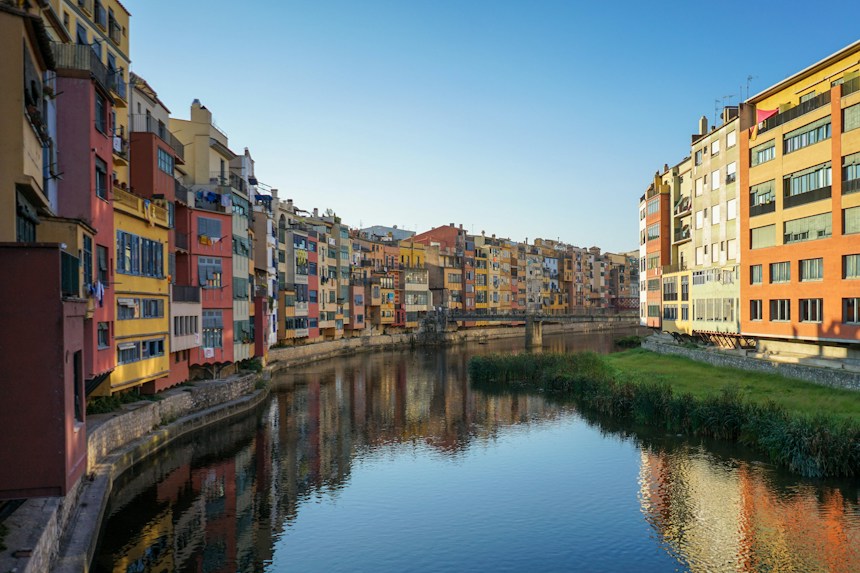
→ Girona Travel Guide 2026: Medieval Walls, Jewish Quarter & Best Day Trips
The perfect inland companion to your Costa Brava Spain trip — 37 km from the coast.
Best Time to Visit Costa Brava Spain
Timing your Costa Brava Spain trip makes a bigger difference than on most Spanish coasts. The gap between peak and shoulder season is extreme in both crowd density and price.
💡 Sweet spot for budget travellers: First two weeks of October. Sea temperature is still 22–25°C, all facilities are open, and hotel rates drop 30–40% from August.
🏃 Sweet spot for experience seekers: Late May to mid-June. Wildflowers on the hills, GR-92 coastal path at perfect walking temperature, restaurants unhurried.
⚠️ When to avoid: Late July and first week of August. Roads to coastal towns back up, beach space in popular coves gets genuinely limited. The tramuntana — a cold dry north wind — makes the northern stretch around Roses and Cadaqués unpleasant from November through February.
Getting to Costa Brava Spain — and Getting Around
How you reach and move around Costa Brava Spain determines how much of it you actually see. Many of the best coves have no bus service at all.
By Air
Girona–Costa Brava Airport (GRO) is 11 km from Girona. Ryanair flies from London, Dublin, Paris. Barcelona El Prat (BCN) is 100 km south — direct train to Girona takes 38 min, €14–18.
Rental Car
Strongly recommended. €35–60/day in shoulder season, €60–90/day July–August. Book months ahead for summer. Many coves are unreachable without a car.
SARFA Buses
Connects Girona to Palamos, L’Estartit, Tossa de Mar, Cadaques year-round. Girona to Palamos costs €6–10, takes ~90 min. Timetables thin significantly in winter.
Regional Trains
Rodalies connect Girona, Figueres, and Portbou. Girona–Figueres: 35 min, €5. Trains do not serve coastal towns directly — use buses or car from the nearest station.
🅿️ Parking note: Cadaqués, Calella de Palafrugell, and Begur fill by 10am in peak season. Use the free lower car parks and walk in, or take the village shuttle buses (€3–5 return).
Video: Costa Brava Spain Ultimate Travel Guide — top things to see and honest practical advice for 2025–2026
Budget & Daily Costs — Costa Brava Spain (2026)
Costa Brava Spain is more expensive than inland Spain and the southern coasts, but less expensive than Barcelona city. Realistic daily breakdown:
💰 Daily Budget Breakdown — Costa Brava Spain 2026
| Category | Budget | Mid-Range | Luxury |
|---|---|---|---|
| 🏨 Accommodation | €20–30/night | €70–120/night | €200–400+ |
| 🍽️ Food & Drink | €15–20/day | €30–45/day | €70–120/day |
| 🚗 Transport | €5–15/day | €20–35/day | €40–80/day |
| 🏟️ Activities | €5–10/day | €15–25/day | €50–100+ |
| 🛍️ Shopping / Misc | €5–10/day | €10–20/day | €40–100+ |
| 📊 DAILY TOTAL | €50–70 | €130–205 | €350–670+ |
Eat the Menú del Día
Three courses + bread + drink for €12–15. The same food at dinner costs €35–50 à la carte. Best money-saving move in Spain.
Stay in Towns, Not Coves
Basing yourself in Palamos or Sant Feliu rather than Calella de Palafrugell cuts hotel bills 25–40% with just a 15-min drive to the coast.
Dalí Museum: Go at 9am
Summer queues exceed 2 hours between 11am–3pm. Arrive at 9am opening and you’ll have rooms largely to yourself for the first hour.
You May Also Like
→ Best Beaches in Catalonia 2026: 12 Coves Ranked by Crowd Level & Scenery
Where to find quiet water even in August — including coves accessible only on foot.
What to Eat in Costa Brava Spain — Local Food Guide
Catalan cooking along Costa Brava Spain is seafood-led and unsentimental. The same dishes appear everywhere because they reflect what local fishing boats actually bring in.
| Dish | What It Is | Avg. Price |
|---|---|---|
| Suquet de peix | Catalan fisherman’s stew — potatoes, mixed fish, sofregit base, finished with picada (almonds, garlic, parsley). Order for minimum 2 people. | €18–22 pp |
| Pa amb tomaquet | Bread rubbed with tomato, garlic, and olive oil. Every table gets it. The tomaquet de penjar variety is drier and more intense than regular tomatoes. | €1–2 |
| Esqueixada | Cold salt cod salad with tomatoes, onion, black olives, and olive oil. The cod is soaked and shredded raw — no cooking. A refreshing summer starter. | €8–12 |
| Arros a la cassola | Drier rice cooked in a ceramic pot with sofregit and local fish or rabbit. Not paella (which is Valencian). Extremely good when done well. | €16–20 pp |
| Gambes de Palamos | Palamos prawns — a local variety considered among the best in Catalonia. Grilled with sea salt, nothing else. Available at Mercat Municipal de Palamos from 7am. | €18–24 per ½-kg |
| Crema catalana | The original — older than French creme brulee. Egg yolk, sugar, milk with lemon and cinnamon, burnt sugar crust. Better at old-school restaurants. | €5–7 |
Where to eat in Costa Brava Spain: El Dorado Mar in Llanca (reliable suquet for €18, family-run since 1983), La Penya in Begur (menu del dia for €14), and Mercat Municipal de Palamos (fish section opens 7am, gambes served at the market bar). For full regional restaurant listings, see the official Costa Brava gastronomy guide.
7-Day Costa Brava Spain Itinerary
This Costa Brava Spain itinerary balances the north (Dali, Cap de Creus, Cadaques) with the central coast (Medes Islands, Begur, Empuries) and the south. It works for all first-time visitors.
Day 1 — Girona Arrival
Morning: Fly into Girona or arrive from Barcelona. Check in.
Afternoon: Walk the 1.9 km city walls (free, 45 min). Visit El Call Jewish quarter and Centre Bonastruc ca Porta (€4).
Evening: Dinner at El Rebost de Can Roca, Carrer Can Ros — Catalan food, no reservations needed, €18–25.
Day 2 — Figueres & Northern Coast
Morning: Drive 37 km to Figueres. Dalí Theatre-Museum at 9am opening. Budget 2–2.5 hours.
Afternoon: Drive 20 km east to Cadaques. Lunch on the waterfront (€15–20). Walk to Dalí’s house at Portlligat (€14, book ahead).
Evening: Sunset from Cap de Creus lighthouse — 30-min drive from Cadaques.
Day 3 — Cap de Creus Hiking
Morning: GR-92 coastal path from El Port de la Selva heading south — 12 km, 4–5 hours through the most dramatic terrain on the Costa Brava Spain coast.
Afternoon: Late lunch in Cadaques.
Evening: Dinner at Casa Anita, Carrer Miguel Rosset — no menu, cash only, ~€25–30. Open since 1961.
Day 4 — Medes Islands
Morning: Drive south to L’Estartit (1.5 hrs). Morning snorkel tour to Medes Islands reserve (€35–45, departs 9am or 11am).
Afternoon: Lunch in L’Estartit. Afternoon on Platja de l’Estartit (2.5 km of sand).
Evening: Stay in L’Escala — better value than L’Estartit for accommodation.
Day 5 — Empuries & Begur Coves
Morning: Visit Empuries at 9am opening (€6). Swim at the adjacent beach before crowds arrive.
Afternoon: Drive to Begur. Visit the 11th-century castle ruin (free). Choose from 5 coves within 15 min — Tamariu tends to be least crowded.
Evening: Dinner in Palafrugell. Restaurant La Xicra — serious Catalan cooking, €30–40/head.
Day 6 — Southern Costa Brava Spain
Morning: Sant Feliu de Guixols — the Porta Ferrada Benedictine monastery gatehouse dates to the 10th century.
Afternoon: Drive the 23 km coastal road to Tossa de Mar. The Vila Vella is the only fortified medieval village still standing on the Catalan coast (12th-century walls, free to enter).
Evening: Dinner at Sa Muralla, Plaza de les Arenes — views of the lit walls at night, €35–45 with wine.
Day 7 — Blanes & Departure
Morning: Jardi Botanic Marimurtra in Blanes — 16 hectares on a clifftop, 4,000 plant species, established 1921. Entry €8. Worth two hours.
Afternoon: Drive to airport. Blanes to Barcelona El Prat: 70 km, allow 90 min. Blanes to Girona GRO: 65 km, ~50 min.
➕ How to Extend Your Costa Brava Spain Trip
A 10-day version adds two nights in Girona city and a day trip to La Garrotxa volcanic region (40 volcanic cones in a 15 km radius, 45 min northwest of Girona), plus more time on the GR-92 hiking sections between Llanca and El Port de la Selva.
Popular Post
→ Cami de Ronda Hiking Guide 2026: The GR-92 Coastal Path Stage by Stage
How to walk the coast of Costa Brava Spain on foot — stages, difficulty, and which sections to prioritise.
Safety & Practical Tips — Costa Brava Spain
Costa Brava Spain is safe — Catalonia has Spain’s lowest violent crime rates among its regions. Here are the practical details:
Safety Level
Very safe. Main risk is petty theft — pickpocketing in Girona’s tourist areas and theft from cars at trailheads. Don’t leave bags visible in parked cars.
Health
No vaccinations required for EU/US/UK/Canadian visitors. Tap water safe in all major towns. Travel insurance strongly recommended — especially for water sports.
Entry Requirements
EU/EEA: national ID. US/UK/Canadian/Australian: visa-free 90 days. From late 2025, non-EU Schengen visitors need ETIAS (€7, valid 3 years).
Emergency Numbers
All emergencies: 112
Mossos d’Esquadra: 088
Tourist helpline: 012
US Embassy Madrid: +34 91 587 2200
For up-to-date visitor information, the official Costa Brava tourism website covers accommodation searches, event calendars, and regional transport details.
FAQ — Costa Brava Spain (2026)
Have You Been to Costa Brava Spain?
Did we miss a hidden cove or a restaurant you love? Have your own tip for travelling Costa Brava Spain on a mid-range budget? Drop your thoughts in the comments below and help fellow travellers plan their perfect trip. 👇
About This Guide
This guide draws on four separate trips to Costa Brava Spain since 2019, most recently in September 2024 — including sections of the GR-92 coastal path, three visits to the Medes Islands, and more menús del día than can be accurately counted. All prices reflect September 2024 research.